

For many online insurance platforms, the quote form is where the business model begins. A visitor enters a mobile number, the platform records a lead, and a sales team follows up to close the policy. On some platforms, the premium appears only after that number is in the system.
That sequence is now under the regulator's spotlight. Speaking at the Business Standard BFSI Insight Summit in Mumbai on 27 October 2026, IRDAI Chairman Ajay Seth said customers should be able to compare insurance prices without handing over personal details, and that airline-style dynamic pricing has no place on digital insurance platforms. "Dynamic pricing works in airline industries, not in insurance," he said.
These are a regulator's stated views. IRDAI has not issued a ban, a circular or a deadline. But for founders, product heads and distribution teams, they arrive in the middle of a major IRDAI overhaul of insurance distribution, and they go straight to how digital insurance businesses win customers.
What Seth said about insurance platforms
Seth did not attack online platforms as such. He called online aggregators a good model in India's digital journey, because people can compare products and then decide. But he was more specific than the headline suggests. In a fuller interview from the same summit, he said some platforms have "introduced, or have been open to introducing" dynamic pricing. His other objections were about how some platforms now operate:
- Prices behind a form. The basic principle of a digital platform, he said, is that customers can compare prices without giving personal details first. He also criticised the practice of collecting mobile numbers for follow-up calls.
- Do Not Disturb workarounds. Some platforms, he said, had sought exemptions from, or customer consents under, the Department of Telecommunications' Do Not Disturb rules so they could call prospective customers.
- Drifting business models. Some platforms have expanded into physical distribution with on-ground teams. Seth said that brings different business dynamics from a purely digital model and can dilute the platform's main purpose.
- Simpler products. For comparison to work at all, he said, products first have to be simple enough for people to compare.
His summary of what a platform should deliver was plain: a good product the policyholder understands, at the lowest price. Guardrails come first, he added, and the question of how much commission to pay follows from there.
It is not the first time an IRDAI chairman has reached for the airline comparison. In January 2020, then-chairman SC Khuntia warned insurers against predatory pricing, citing the airline and telecom sectors.
Is risk-based pricing the same as dynamic pricing?
No. Premiums that vary with the insured risk, such as age and sum insured in health or vehicle details in motor, are normal underwriting and remain allowed within IRDAI's rules. Seth's target is prices that move with demand, timing or a buyer's behaviour on a digital platform. His remarks do not require identical premiums for everyone, and they set no technical standard for which data points a platform may use.
The phone-number problem
Some information is needed to price a policy; some is mainly useful for selling one. Seth's remarks draw a line between the two, and many quote journeys mix them together:
| Needed to calculate a premium | Mainly useful for sales follow-up |
|---|---|
| Age of each person to be insured | Mobile number |
| Sum insured and policy type | Email address |
| City or pin code (health), vehicle details (motor) | Consent to marketing calls |
| Relevant health or claims history | Consent to calls despite a Do Not Disturb registration |
A platform asking for the left-hand column is pricing a risk. A platform that won't show a number until it has the right-hand column is generating a sales lead. Seth's point is that a customer who arrives wanting information should get it before any sales conversation starts.

Where online aggregators fit now
Aggregators sit at the centre of this debate, and they were already under pressure. Shares of listed distribution businesses, including Policybazaar owner PB Fintech, fell sharply after IRDAI published its distribution reform paper, as covered in our report on IRDAI's proposed commission rules for 2026.
Competition is also coming from the regulator's own side. On 27 October, Seth said he expects Bima Sugam, the IRDAI-backed online insurance marketplace, to launch its first product within a month to six weeks.
For aggregators, motor is where this bites hardest. The same draft rules propose nil commission for distribution entities on third-party motor cover for new vehicles. Bima Sugam's first product is expected to be motor insurance, subject to regulatory changes, sold with a platform fee capped at 5% of the premium. If both go ahead as proposed, platforms would face lower commission and a low-cost, regulator-backed competitor in the same product line at the same time. Business Standard put the aggregators' concerns about motor and life commissions to Seth directly. His answer did not engage with the numbers; he went back to what he thinks a digital platform should be for.
Seth also wants buyers to compare insurers on service, not just price. He pointed to claims data, such as how long hospital admission approvals take, as information that would help customers judge quality. Trust-led distribution models are one response; our founder story on how Beshak built its insurance business around customer trust shows one approach.
Commissions: the bigger fight behind the remarks
Behind the platform remarks sits a bigger fight over commissions. IRDAI's consultation paper, Recalibrating Economics of Insurance Distribution, published on 23 September 2026, proposes new commission structures and tighter limits on insurers' expenses.
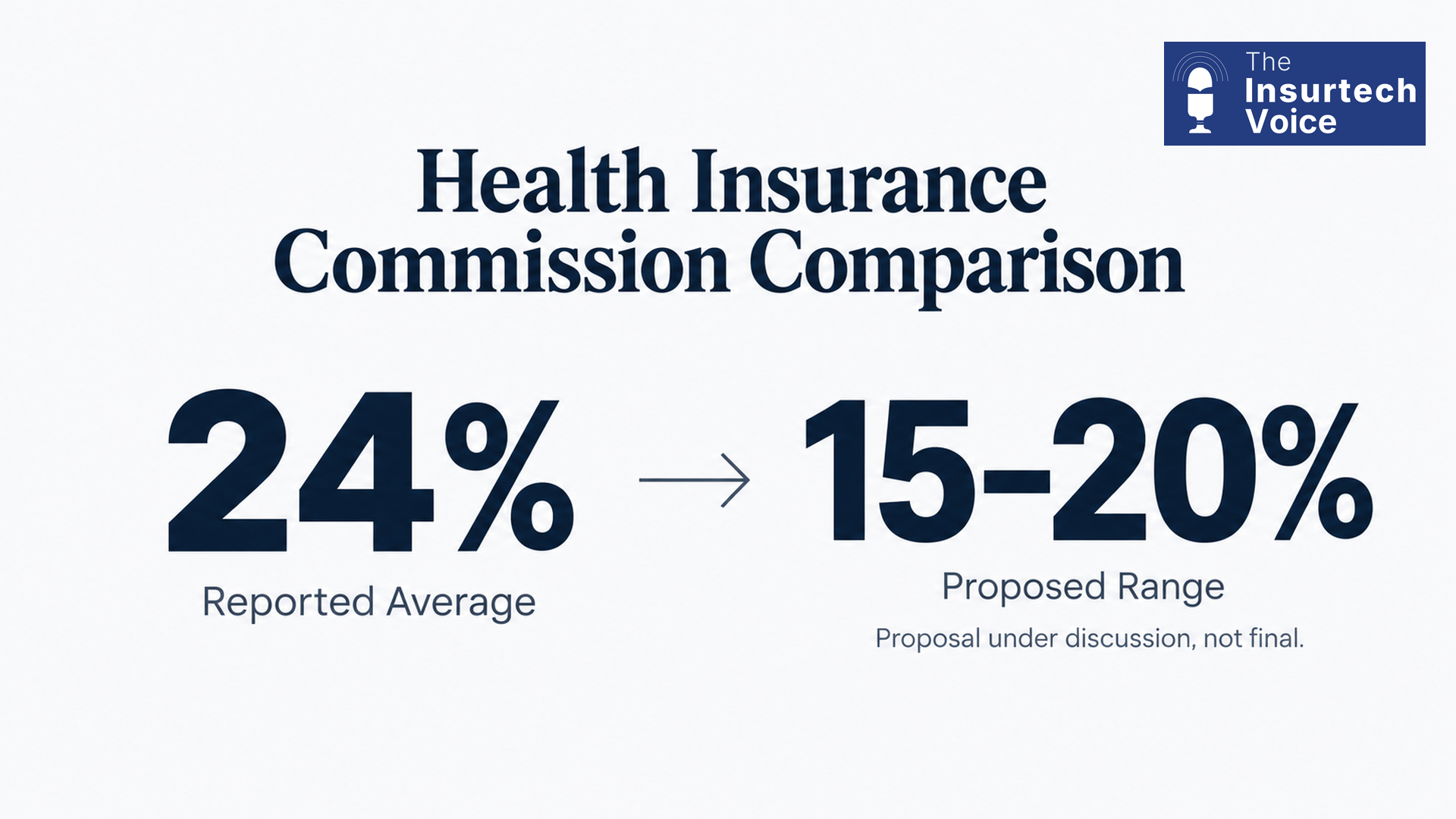
On health insurance, Seth said average commission is about 24% across new and renewal business, and the proposals aim to bring that down to around 15% to 20%. New sales would earn more than renewals, since winning a new customer takes more effort than renewing an existing one. High distribution costs, he argued, leave less money in the pool for claims, which pushes premiums up.
Portability is the most pointed part. Current rules provide no commission on a ported health policy, but in practice insurers treat a ported policy as new business and pay first-year commission on it. The paper proposes paying it at the renewal rate instead. Seth backed that with 2024–25 data: three insurers received 60% of all ported-in policies, while those same three accounted for 20% of policies ported out. Ninety per cent of porting involved just seven insurers.
"The commission is driving behaviour from one insurer to another," Seth said. The numbers show concentration rather than proof that every switch is commission-led, and concerns have been raised that lower payouts could discourage intermediaries from servicing renewals and helping customers port. That debate is not settled.
Before 31 October: what leaders should do
IRDAI has extended the consultation deadline from 25 October to 31 October 2026, after receiving more than 650 submissions. Seth says the reform will be built on consensus, and nothing he said yet amounts to a dynamic-pricing ban, an implementation date or a compliance framework for quote journeys. The industry still has a short window to shape the rules.
For leadership teams at insurers, aggregators and brokers, four steps are worth taking now:
- File a response. If the commission caps or the platform remarks affect your model, put your data in front of the regulator before 31 October.
- Audit the quote journey. Check whether a visitor can see a meaningful premium before giving a phone number, and whether the fields needed for a quote are clearly separate from marketing consent.
- Stress-test motor revenue. Model the business with nil third-party commission on new vehicles and a regulator-backed marketplace charging no more than 5% of the premium.
- Get claims data ready. Seth wants buyers to compare insurers on service, including how fast hospital admissions are approved. Insurers with strong numbers will be better placed if that data becomes public.
The phone-number question is the one platforms can act on without waiting for IRDAI: whether to show the price first, and what that change would do to their lead funnel and sales model.
Editorial note: Seth's remarks are taken from reporting by Business Standard, Cafemutual and Asia Insurance Post; details of the consultation paper are from IRDAI's own publications. The comparison table is an illustrative example, not a regulatory list. Drafted with AI assistance and reviewed by The InsurTech Voice editorial team; for information only, not legal or regulatory advice.
Stay Ahead of Insurance Industry News
Follow The InsurTech Voice for the latest news, regulatory updates and industry insights across Insurance, InsurTech, Reinsurance and FinTech. Subscribe to The InsurTech Voice
Frequently asked questions
- What did the IRDAI chief say about dynamic pricing in insurance?
- Speaking at the Business Standard BFSI Insight Summit in Mumbai on 27 October 2026, IRDAI Chairman Ajay Seth said dynamic pricing works for airlines but not for insurance, and that digital insurance platforms should not have any opportunity to use it.
- Has IRDAI banned dynamic pricing in insurance?
- No. Ajay Seth's remarks set out the regulator's view, but IRDAI has not issued any regulation, circular or deadline banning dynamic pricing on insurance platforms.
- Why does IRDAI want insurance price comparison without personal details?
- Ajay Seth said the basic principle of a digital platform is that customers should be able to compare prices without first giving personal details. He also criticised platforms that ask for mobile numbers for follow-up calls and that sought exemptions from, or consents under, Do Not Disturb rules to call prospective customers.
- Is risk-based insurance pricing the same as dynamic pricing?
- No. Premiums that differ because of the insured risk, such as age and sum insured in health cover or vehicle details in motor cover, are normal underwriting. Dynamic pricing usually means prices moving with demand, timing or the buyer's behaviour. Seth's remarks targeted the second, not risk-based pricing.
- What did Ajay Seth say about online insurance aggregators?
- He said online aggregators play a significant role because people can compare products and then decide, but that their focus must stay on the policyholder. He questioned platforms that have expanded into physical distribution through on-ground teams.
- What are IRDAI's proposed health insurance commission changes?
- Seth said average health insurance commission is about 24% across new and renewal business, and IRDAI's proposals aim to bring it down to around 15% to 20%, with higher commission on new sales, lower commission on renewals, and ported policies paid at the renewal rate. The proposals are not final.
- When is the deadline for comments on IRDAI's distribution consultation paper?
- IRDAI extended the deadline for feedback on its consultation paper, Recalibrating Economics of Insurance Distribution, from 25 October to 31 October 2026, after receiving more than 650 submissions.
- When will Bima Sugam launch its first product?
- On 27 October 2026, Ajay Seth said he expects Bima Sugam, the IRDAI-backed online insurance marketplace, to launch its first product, motor insurance, within a month to six weeks. He also said fees on the platform should not exceed 5% of the premium.
Sources
Primary sources
- IRDAI press release, 23 September 2026: Recalibrating Economics of Insurance Distribution
- IRDAI consultation paper: Recalibrating Economics of Insurance Distribution
Reporting and analysis
- Business Standard, 27 October 2026: Dynamic pricing works for airlines, not insurance, says Irdai Chief
- Business Standard, 27 October 2026: Big part of health insurance is a pull product, not push: Irdai's Ajay Seth
- Cafemutual: Health insurance is a 'pull problem', not a push problem, says IRDAI chief
- Business Standard, 28 October 2026: Insurance must grow 1.5-2x faster than GDP, says Irdai chief Ajay Seth
- Asia Insurance Post: Distribution reforms must be built on consensus, says IRDAI chief
- BloombergQuint, January 2020: IRDAI chief cautions insurers against predatory pricing
The InsurTech Voice · An Initiative by Insurnest