
Key takeaways
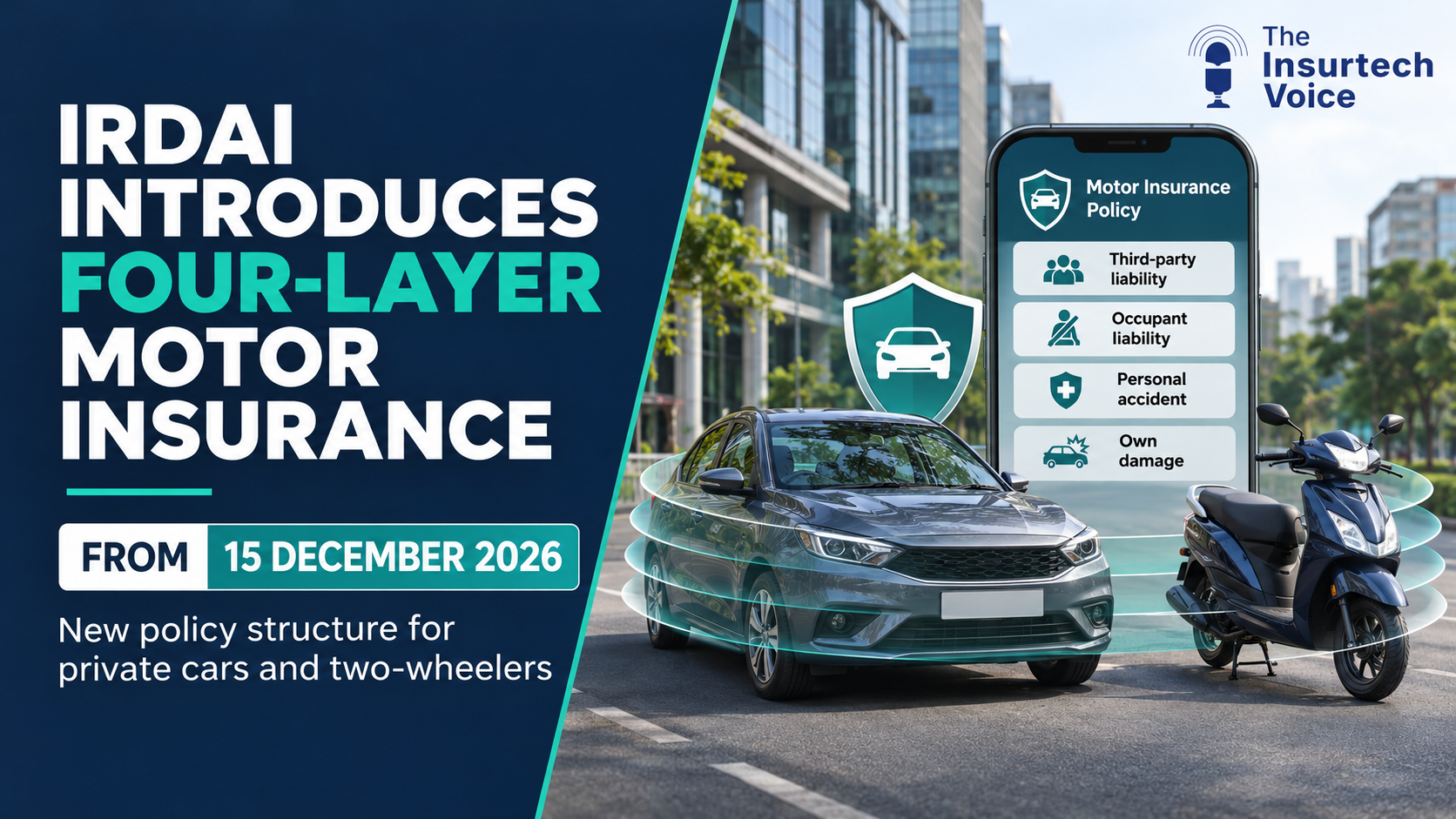
- The IRDAI four layer motor insurance structure applies to private car and two-wheeler policies from 15 December 2026.
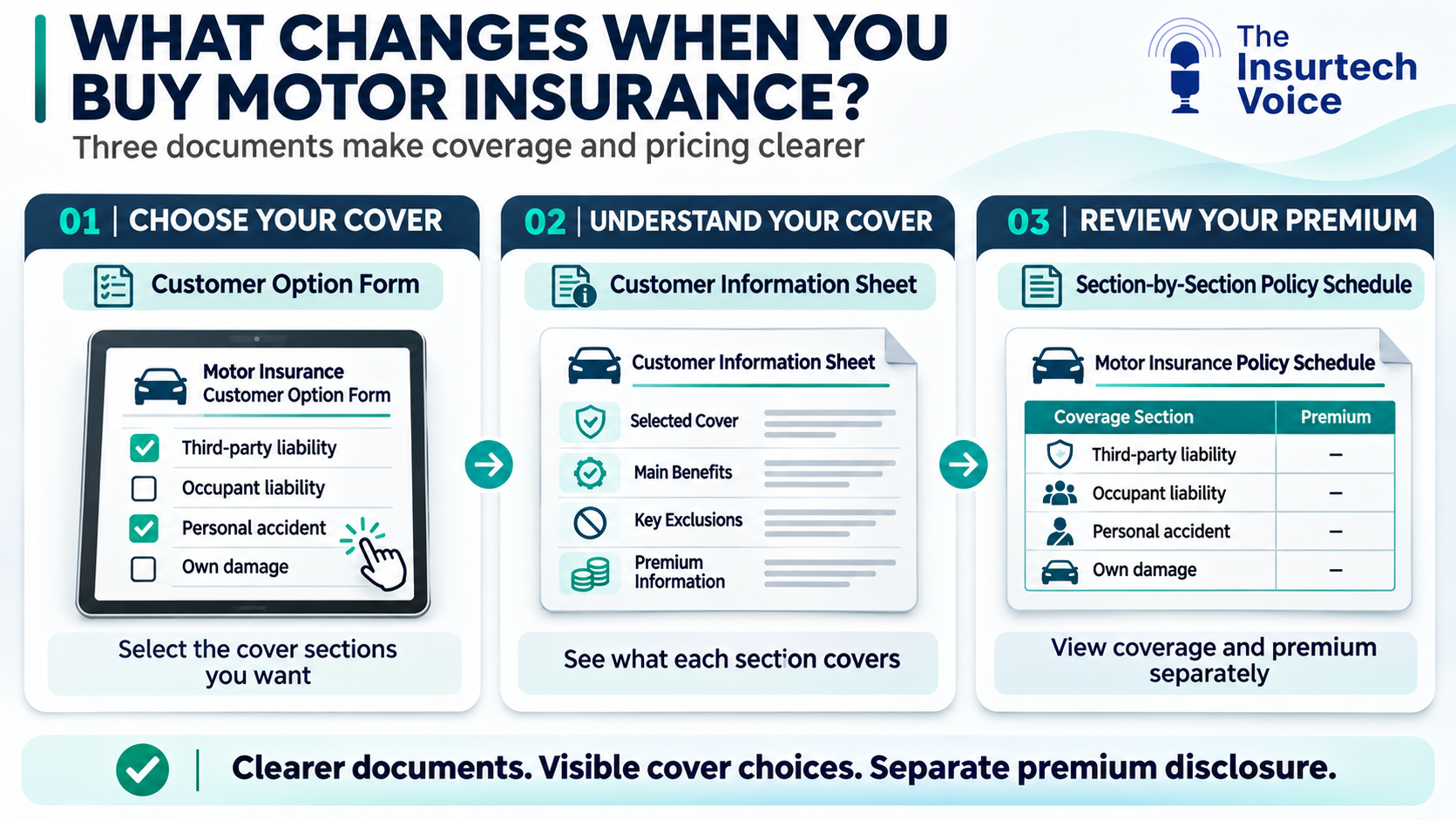
- The four sections are third-party liability, legal liability to occupants or pillion riders, personal accident cover and own-damage cover.
- Third-party liability is mandatory, and owner personal accident cover stays compulsory under existing rules. The other covers are optional.
- Insurers must collect a customer option form, issue a Customer Information Sheet and show the premium for each section separately.
- The change follows a Supreme Court judgment and must also go live on Bima Sugam from 15 December.
T. Ramu died in a road accident while travelling in his own Maruti 800. His family claimed compensation under the car's comprehensive policy, and the insurer, National Insurance Company, refused. It argued that the policy did not cover the owner as an occupant, because no extra premium had been paid for that risk.
The dispute reached the Supreme Court as National Insurance Co. Ltd v Thungala Dhana Laxmi (2026 INSC 793). On 4 August 2026, the court ruled against the insurer, holding that a comprehensive or package policy covers the vehicle's occupants and cannot be treated like a basic third-party policy.
It also went further, directing the Insurance Regulatory and Development Authority of India (IRDAI) to make motor policies easier to understand.
This week, IRDAI turned that direction into rules. The IRDAI four layer motor insurance structure, announced on 3 November 2026, will apply to private car and two-wheeler policies from 15 December 2026.
The Four Layers
Every private car and two-wheeler policy will now be built from the same four sections. Reports on the circular do not extend the structure to commercial vehicles.
| Section | What it covers | Mandatory? |
|---|---|---|
| I. Third-party liability | Death, injury or property damage you cause to others | Yes |
| II. Legal liability to occupants or pillion riders | Your liability towards passengers and pillion riders, including employees | No |
| III. Personal accident | Owner-driver cover, plus optional cover for occupants, pillion riders and other drivers | Owner-driver cover stays compulsory under existing rules; the rest is optional |
| IV. Own damage | Loss of or damage to your own vehicle | No |
In the structure IRDAI described to the Supreme Court, the occupant liability layer excludes the owner, the driver and the insured's family members, who are covered under the personal accident layer instead.
Many buyers choose a comprehensive policy, which bundles third party and own damage insurance together. That option doesn't go away. What changes is that each part of the bundle now has its own name, its own wording and its own visible price.
The basic covers themselves stay the same. The aim, as reported, is to show customers what they are buying, what they are not buying and how much each part costs.
What Changes When You Buy a Policy
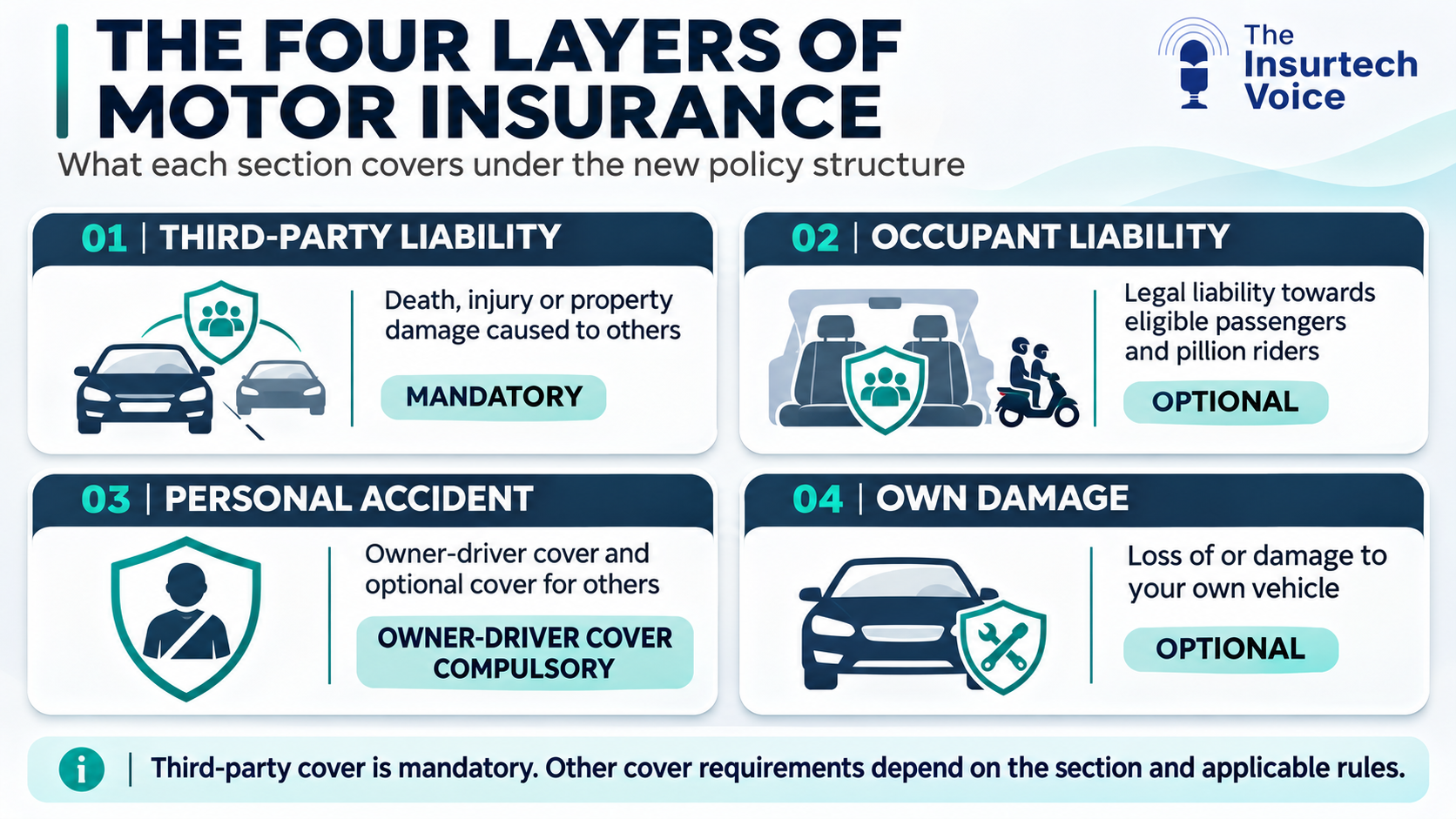
For buyers, the new motor insurance structure 2026 brings three documents to every sale.
- A customer option form. You tick the covers you want, online or offline. Insurers must collect a completed form for every private car and two-wheeler policy, and it becomes part of the policy.
- A Customer Information Sheet. Issued at the point of sale, the motor insurance customer information sheet sets out the coverage under each section and the premium charged for it.
- A section-by-section schedule. The policy schedule must disclose the actual cover and premium for each section separately. The certificate of insurance must still meet the Central Motor Vehicles Rules, 1989.
All general insurers must also use standard policy wording for these policies. IRDAI based it on drafts submitted by the General Insurance Council after consulting the industry.
If You Already Have a Policy
Nothing in the reported rules requires existing policyholders to act before renewal. But if you hold a third-party policy and want cover for your passengers, you can now add it mid-term.
Occupant liability cover in motor insurance can be bought as an endorsement from the insurer that issued your third-party policy, for an additional premium. The extra cover starts from the date and time shown on the endorsement, and you don't have to cancel your existing policy.
What It Means for Insurers and Distributors
The timeline is tight. Insurers have about six weeks to adopt the new wordings, build the option form into every sales channel and change their policy documents. They must also make the four layer motor insurance policy available on Bima Sugam, IRDAI's online insurance marketplace, from the same date. The circular says that integration must be completed at the same time.
Insurers keep some room to compete. They can still price own-damage cover according to market conditions and develop new covers. They can also add or remove general exclusions depending on the cover chosen, as long as they don't cut the basic cover the structure prescribes.
The change lands in a line under pressure from several directions. Motor third-party claims have weighed on some insurers' results this year.
New India Assurance made an additional ₹715 crore provision for its motor third-party portfolio in the September quarter, after a Supreme Court verdict recognising the economic value of unpaid domestic work in accident compensation. It is one of the four state-run insurers now required to file turnaround plans to cut losses.
IRDAI's draft distribution rules also propose nil commission for distribution entities on motor third-party cover for new vehicles, as covered in our explainer on IRDAI's proposed commission rules.
Bima Sugam adds a third pressure point. Its first product is expected to be motor insurance, sold with a capped platform fee, as we reported in our coverage of IRDAI chairman Ajay Seth's remarks on online pricing. With identical wording and separately priced sections, motor policies should be easier to compare.
"Standard wording and a price for every section take away the fine print that motor sales have relied on. Distributors who explain the four layers well will build trust; those who rely on confusion will find this hard," said Hitul Mistry, founder of The InsurTech Voice.
A Broader Clean-Up
The four layers are one part of a larger set of Supreme Court directions in the same case. The court also directed a longer mandatory third-party insurance period for newly bought cars and two-wheelers, and wider use of technology to catch uninsured vehicles.
Reports on this week's circular do not include that longer third-party period, which is a separate direction. The circular deals with the policy structure.
The central idea is simple, and it goes back to the Maruti 800 case. When a customer has ticked a box on a completed form, there is far less room to argue later about whether a risk was covered.
Reporting note: Details of the circular are based on reporting by Business Standard and The Times of India; background on the Supreme Court case is from LiveLaw and Verdictum. Prepared with AI assistance and reviewed by The InsurTech Voice editors. For information only, not legal advice.
Frequently asked questions
- What is IRDAI's four layer motor insurance structure?
- It is a standard format for private car and two-wheeler policies that splits cover into four sections: third-party liability, legal liability to occupants or pillion riders, personal accident cover and own-damage cover. It applies from 15 December 2026.
- Which covers are mandatory under the new structure?
- Third-party liability is mandatory. Personal accident cover for the owner remains compulsory under existing rules. Legal liability to occupants or pillion riders, personal accident cover for others and own-damage cover are optional.
- What is occupant liability cover in motor insurance?
- It covers the policyholder's legal liability towards people travelling in the vehicle, such as passengers or pillion riders, including employees of the insured. Under the new structure it is a separate, optional section. In the structure IRDAI described to the Supreme Court, it excludes the owner, the driver and the insured's family members, who are covered under the personal accident layer.
- What is the motor insurance customer information sheet?
- It is a document insurers must issue at the point of sale. It sets out the coverage under each section of the policy and the premium charged for it, so customers can see what they are buying and what each part costs.
- What is the customer option form?
- A form on which the customer ticks the covers they want, online or offline. Insurers must collect a completed form for every private car and two-wheeler policy, and the form becomes part of the policy.
- Can existing policyholders add occupant cover?
- Yes. Holders of third-party policies can add legal liability cover for occupants or pillion riders during the policy period by paying an additional premium to the same insurer, without cancelling their policy.
- Does the four layer structure apply to commercial vehicles?
- The circular covers private cars and two-wheelers. Reports on it do not extend the four layer structure to commercial vehicles such as taxis or trucks.
- What happens to add-on covers like zero depreciation?
- The circular does not list specific add-ons. Insurers keep the freedom to develop new covers and to price own-damage cover according to market conditions, so policyholders should check the add-ons on offer with their insurer at renewal.
- Is the mandatory third-party insurance period changing too?
- The Supreme Court directed a longer mandatory third-party period for newly bought cars and two-wheelers in the same case, but that is a separate direction. This circular deals with the four layer policy structure.
- Will motor insurance premiums change?
- Reports on the circular do not mention any change to premium rates. It requires insurers to show the premium for each section separately, and insurers keep the freedom to price own-damage cover according to market conditions.
Sources
Reporting on the IRDAI circular
- Business Standard, 4 November 2026: Irdai introduces four-layer motor insurance structure from December 15
- The Times of India: IRDAI directs insurers to offer four-layer motor cover in compliance with SC order
- The Economic Times, 4 November 2026: IRDAI mandates four-tier structure for motor insurance from Dec 15
New India Assurance results
The Supreme Court case
- LiveLaw, 5 August 2026: Comprehensive/package motor insurance covers vehicle occupants, Supreme Court explains different types of policies
- Verdictum: National Insurance Co Ltd v Thungala Dhana Laxmi, four-layer policy structure and motor insurance enforcement
- Supreme Court Observer: Motor insurance and coverage for vehicle occupants
The InsurTech Voice · An Initiative by Insurnest